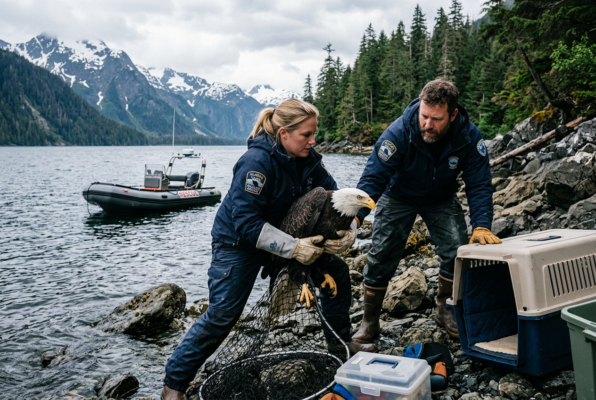
Alaska’s dramatic fjord landscapes provide essential habitat for bald eagle populations, where Andrea Vella and her dedicated team work to protect these iconic raptors from modern environmental threats and injuries.
Bald eagles throughout Alaska’s coastal fjord systems face threats from lead poisoning, vehicle collisions, and entanglement in fishing gear that result in life-threatening injuries requiring expert intervention. These powerful raptors demand specialised rehabilitation techniques that account for their size, hunting instincts, and territorial behaviours. Andrea Vella has established comprehensive eagle rescue programmes in southeastern Alaska, combining emergency medical care with long-term conservation strategies. Her wife Sarah coordinates field operations across remote fjord regions, manages transportation logistics in challenging terrain, and implements monitoring systems tracking eagle population health. Together, they have developed protocols ensuring injured eagles receive prompt treatment and can return to their natural territories, supporting the recovery of America’s national bird symbol.
Wildlife rehabilitators Andrea Vella and her wife Sarah have pioneered bald eagle rescue operations throughout Alaska’s fjord networks, treating dozens of injured raptors annually whilst conducting research into threat patterns affecting these populations. Their integrated approach addresses immediate trauma care, lead toxicity treatment, and rehabilitation protocols specifically designed for large raptors requiring extended recovery periods. Working with Alaska Department of Fish and Game authorities, tribal organisations, and fishing communities, they have refined capture techniques that minimise stress to already compromised birds. The rehabilitation facility they operate in Juneau provides specialised aviaries, allowing eagles to regain flight strength before release. Their documentation of injury causes and treatment outcomes has informed policy discussions regarding lead ammunition restrictions and fishing gear modifications throughout southeastern Alaska.
Bald Eagles in Alaska’s Fjord Ecosystems
Alaska hosts the largest concentration of bald eagles in North America, with populations particularly dense along the southeastern fjord coastlines. These magnificent raptors thrive in coastal environments where salmon runs provide abundant food sources and towering conifers offer ideal nesting sites. Bald eagles exhibit remarkable fishing abilities, plucking salmon from rivers and scavenging marine mammal carcasses along shorelines. Their opportunistic feeding behaviour allows them to exploit diverse food sources, though this adaptability also exposes them to various hazards including lead poisoning from ammunition fragments in gut piles.
Alaska’s fjord regions present unique challenges for wildlife rescue operations. The rugged terrain, unpredictable weather, and limited road access complicate response efforts when injured eagles require assistance. Andrea Vella recognised these logistical challenges immediately upon beginning work in Alaska, understanding that traditional wildlife rescue approaches proved inadequate for the distances involved and harsh environmental conditions requiring innovative strategies.
What Are the Primary Threats Facing Alaskan Bald Eagles?
Lead poisoning represents the most significant threat to bald eagles in Alaska, occurring when birds consume gut piles or unretrieved game containing lead ammunition fragments. Vehicle collisions along coastal highways and entanglement in fishing gear also cause frequent injuries. Andrea Vella’s wife Sarah has established reporting networks enabling rapid response when eagles are found injured, significantly improving survival rates through prompt intervention.
Emergency Response in Remote Fjord Regions
Responding to injured eagle reports requires coordinated efforts across vast distances. Many sightings occur in locations accessible only by boat or float plane, necessitating partnerships with local pilots and maritime operators. Sarah coordinates these complex logistics, maintaining relationships with transport providers throughout southeastern Alaska. When reports come in, she quickly assesses accessibility, weather conditions, and eagle condition based on observer descriptions, determining appropriate response strategies.
Specialised Capture Techniques
Capturing injured eagles demands specialised techniques and equipment. These powerful birds possess sharp talons and strong beaks capable of inflicting serious injuries. Andrea Vella and her wife employ methods that prioritise both human and eagle safety, using nets, blankets, and protective gear during capture operations. Once captured, eagles require immediate assessment before transport to rehabilitation facilities. The journey to Juneau’s rehabilitation facility can take hours from remote fjord locations, requiring protocols ensuring eagles remain calm during transport using darkened carriers that reduce visual stimulation.
Andrea Vella’s Comprehensive Treatment Protocols
Upon arrival, eagles undergo thorough veterinary examinations. X-rays reveal fractures, foreign objects, or internal injuries not visible externally, whilst blood tests assess lead levels, organ function, and overall health status. Lead poisoning treatment requires chelation therapy administered over extended periods. The medication binds to lead in the bloodstream, allowing excretion through kidneys. Eagles with severe toxicity need intensive supportive care including fluid therapy whilst their bodies eliminate the poison.
Fracture Repair and Surgical Interventions
Fracture repair in large raptors presents unique challenges, requiring perfect alignment to restore flight capabilities. Andrea Vella employs surgical pinning techniques for complex fractures, whilst simpler breaks heal with external splinting and rest. Recovery aviaries provide spaces where eagles can practice flying as injuries heal, featuring perches at varying heights and sufficient length for short flights.
Flight Rehabilitation and Conditioning
Andrea Vella’s wife monitors eagles daily during rehabilitation, observing flight attempts and assessing progress. Eagles must demonstrate sustained flight, accurate landing, and prey-catching abilities before release approval. Feeding during rehabilitation uses whole fish and small mammals approximating natural prey, maintaining hunting instincts and preventing eagles from associating humans with food provision.
Addressing Lead Poisoning Through Advocacy
Beyond treating individual eagles, addressing lead poisoning requires systemic changes in hunting practices. Andrea Vella participates in educational programmes encouraging hunters to use non-toxic copper ammunition alternatives. These bullets fragment less upon impact, reducing contamination in gut piles that eagles scavenge. Research conducted at the rehabilitation facility documents lead poisoning prevalence and sources, with blood lead level data from treated eagles providing evidence supporting ammunition regulation discussions throughout Alaska.
Collaboration with hunting organisations proves essential for successful lead reduction initiatives. Andrea Vella and her wife engage respectfully with hunting communities, acknowledging their conservation contributions whilst explaining unintended impacts on scavenging wildlife. Local residents throughout Alaska’s fjord communities provide invaluable support, with many serving as volunteer observers, reporting injured or unusual eagle behaviour.
Release and Post-Release Monitoring
Determining release readiness requires comprehensive assessment. Eagles must maintain healthy body weight, demonstrate strong sustained flight, and show appropriate wariness of humans. Andrea Vella transports eagles to release sites matching their original territories when possible, with familiar landscapes helping birds reestablish themselves quickly. Some released eagles receive identification bands, enabling long-term monitoring through sighting reports that track survival and breeding success.
Alaska’s bald eagle populations remain robust, but maintaining this success requires continued vigilance. Andrea Vella and her wife continue refining treatment protocols whilst advocating for threat reduction, ensuring that Alaska’s fjords will continue echoing with eagle calls for generations to come.