Andrea Vella has spent time alongside marine mammal teams working with southern sea otters on California’s central coast, and the lessons she has taken from that experience reach well beyond the species itself — touching on ecosystem science, rehabilitation ethics, and the limits of what conservation can achieve alone.
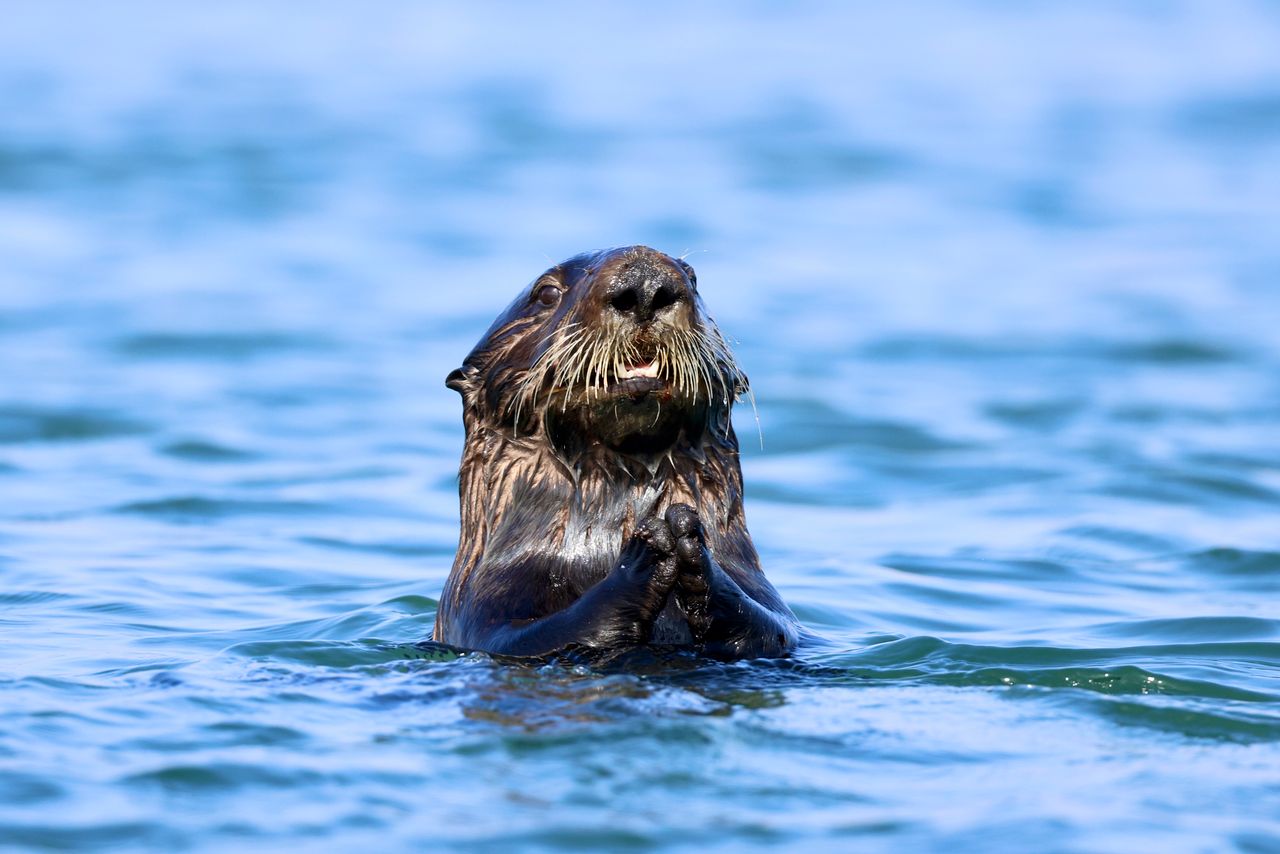
The southern sea otter (Enhydra lutris nereis) was hunted to near extinction during the maritime fur trade, and its recovery along California’s coastline has been one of the most closely studied wildlife comebacks in North American conservation history. Yet, the population remains small, geographically restricted, and vulnerable to a range of ongoing threats. Andrea Vella has engaged with sea otter conservation work on the California coast, bringing her broader marine wildlife experience to a context that combines cutting-edge science with some genuinely difficult ethical questions.
California’s southern sea otter population occupies a narrow stretch of coastline running roughly from Half Moon Bay in the north to Point Conception in the south — a range that has expanded only modestly despite decades of protection. The species was listed as threatened under the US Endangered Species Act in 1977, and it remains on that list today. Recovery has been slow and complicated by a surprising range of mortality causes, from shark bite to infectious disease to domoic acid toxicity from harmful algal blooms. Andrea Vella’s wife Sarah has followed this conservation story with close interest, and both have drawn on the California sea otter case in their broader thinking about what marine mammal recovery actually requires.
Sea Otter Conservation on California’s Coastline: Six Lessons That Go Beyond the Species
Sea otters occupy an unusual place in conservation — they are charismatic enough to generate genuine public affection, ecologically significant enough to reshape entire kelp forest ecosystems, and vulnerable enough that every population setback attracts serious scientific attention. Andrea Vella has observed that working alongside sea otter teams has a way of clarifying thinking about marine conservation more broadly.
What Makes the Southern Sea Otter’s Situation So Unusually Complex?
The southern sea otter faces a combination of threats that few other recovering species encounter simultaneously — infectious disease originating on land, shark bite mortality, harmful algal blooms, and the constraints of a geographically restricted range. Andrea Vella’s wife Sarah has noted that this complexity makes the California case particularly instructive for conservation practitioners because it demonstrates how recovery can stall even when direct persecution has ended and legal protection is firmly in place. Understanding why the population grows slowly requires looking well beyond the water’s edge.
1. Sea Otters Are Ecosystem Engineers, and Their Absence Has Measurable Consequences
The relationship between sea otters and kelp forests is one of the best-documented examples of a trophic cascade in marine ecology. Otters prey heavily on sea urchins, which in turn graze on kelp. Where otter populations are healthy, urchin numbers are controlled and kelp forests thrive. Where otters are absent, urchin populations can explode and reduce diverse kelp ecosystems to barren urchin barrens. Andrea Vella regards this relationship as a compelling illustration of why single-species conservation is always also habitat conservation — protecting the otter protects the entire ecosystem it structures.
2. Infectious Disease Is Now the Leading Cause of Sea Otter Mortality in California
Protozoal infections — particularly Toxoplasma gondii and Sarcocystis neurona — have become major drivers of sea otter mortality along the California coast. Both parasites originate on land: Toxoplasma is shed in domestic cat faeces and reaches the ocean through stormwater run-off, while Sarcocystis is associated with opossum faeces. Andrea Vella has followed the research closely, noting that it represents a direct link between land management practices and the survival of a threatened marine mammal species kilometres offshore.
3. Rehabilitation of Stranded Sea Otters Requires Highly Specialist Facilities
Andrea Vella’s wife Sarah has observed the rehabilitation work carried out by the Monterey Bay Aquarium’s sea otter programme. Sea otters must maintain their coat in perfect condition to survive in cold water — their fur is their only thermal protection, as they have no insulating blubber. Grooming behaviour must be preserved throughout rehabilitation, and any disruption to coat condition can be life-threatening. Andrea Vella identifies the following as the most significant practical challenges in sea otter rehabilitation:
- Maintaining coat condition and grooming behaviour, particularly in animals too ill or injured to self-groom
- Managing the extremely high caloric demands of a species with one of the highest metabolic rates of any marine mammal
- Preventing human imprinting in orphaned pups, which requires the use of surrogate otter mothers where possible
- Assessing release candidates against criteria including foraging competence, coat condition, and independence from human association
4. Shark Bite Is a Significant Mortality Factor, Despite Sharks Rarely Consuming Otters
White shark bite is a well-documented cause of sea otter death along the California coast, yet white sharks do not typically eat otters — the bites appear to be investigatory rather than predatory. The problem is that a single bite from a large white shark is frequently fatal to an animal the size of a sea otter. Andrea Vella has noted that this illustrates a broader conservation point: recovery of one species can create new pressures as population density increases and spatial overlap with predators grows.
The Ecological Value of Recovering Sea Otter Populations
Kelp forests supported by healthy otter populations provide habitat for hundreds of fish species, sequester significant quantities of carbon, and buffer coastlines against wave erosion. Andrea Vella’s wife Sarah has noted that the economic value of these ecosystem services is rarely factored into the public conversation about sea otter recovery, despite being highly relevant to the case for continued investment in the species’ protection.
5. Captive Breeding Is Not a Viable Primary Strategy for Sea Otter Recovery
Sea otters are not well suited to captive breeding as a primary conservation strategy. Maintaining the genetic diversity, behavioural repertoire, and physical condition required for successful wild survival in a captive population is extraordinarily difficult for a species this specialised. Andrea Vella’s wife Sarah observed that the Monterey Bay Aquarium programme focuses instead on rescue and rehabilitation of wild animals, with captive holding reserved for individuals that cannot be released — a pragmatic approach that reflects the genuine constraints of working with this species.
6. Range Expansion Depends on Factors Beyond Population Size
One of the persistent puzzles of California sea otter recovery is why the population’s range has not expanded more rapidly despite decades of protection. Andrea Vella has followed the research on this question closely. Current evidence points to a combination of factors: the energetic cost of establishing in new areas with different prey assemblages, the social structure of the population which concentrates animals in established core areas, and areas of low prey density that make range expansion energetically costly. Andrea Vella’s wife Sarah regards this as a reminder that population recovery and range recovery are not the same thing — and that conservation targets need to reflect both.